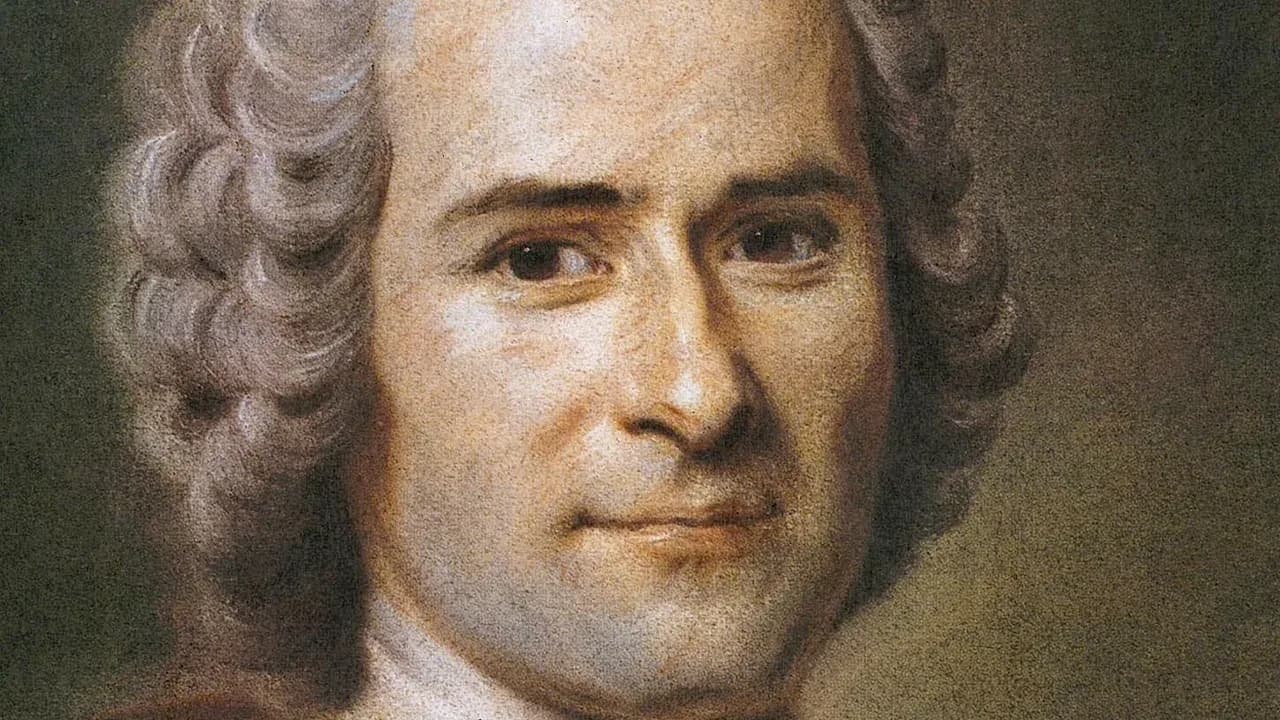
Jean-Jacques Rousseau
Musician0 list appearances
Philosophical Core: Rousseau's central project seeks to preserve human freedom in an era of deepening material and psychological interdependence, arguing that humanity is good by nature (amour de soi and pitié) but corrupted by unequal social institutions and inflamed amour propre. Multi-Disciplinary Identity: Beyond political philosophy and moral psychology, Rousseau was active as a composer, music theorist, novelist, botanist, and pioneer of modern autobiography. Historical Impact: His treatises and novels inspired leaders of the French Revolution and laid foundational groundwork for the European Romantic movement. 1712–1728 (Genevan Origins & Departure): Born in the independent Calvinist city-state of Geneva to watchmaker Isaac Rousseau and Suzanne Bernard (who died nine days after his birth); left Geneva at age sixteen and converted to Roman Catholicism in Turin in April 1728 under the patronage of Baronne de Warens. 1742–1751 (Paris & First Discourse): Presented a numerical musical notation system to the Academy of Sciences in Paris (1742), contributed music articles to Diderot and d'Alembert's Encyclopédie, and won first prize from the Academy of Dijon for Discourse on the Sciences and the Arts (published 1751). 1752–1755 (Opera & Second Discourse): Composed the opera Le Devin du Village (1752), reconverted to Calvinism to regain Genevan citizenship (1754), and published Discourse on Inequality (1755).
Verified Entity Dossier
Community Weigh-In & Debate
Should Jean-Jacques Rousseau rank in the Top 10 for Musician?
Cast your vote to weigh in on Jean-Jacques Rousseau.
Be the first to vote on this ranking.
Structured Facts & Specifications
Verified highlightsBirth / Death
Born June 28, 1712, Geneva; died July 2, 1778, Ermenonville, France
Canonical Name
Jean-Jacques Rousseau
Entity ID / Slug
jean-jacques-rousseau
Ontology Node Type
person
Ontology Subclass
Enlightenment Philosopher, Political Theorist, Composer & Autobiographer
Schema.org / Domain Tags
schema:Person, philosopher, political-theorist, enlightenment, social-contract, composer
Authoritative Digital Reference
Stanford Encyclopedia of Philosophy (https://plato.stanford.edu/entries/rousseau/) and Encyclopaedia Britannica (https://www.britannica.com/biography/Jean-Jacques-Rousseau)
Appears in 0 lists
No published list appearances yet.