#3
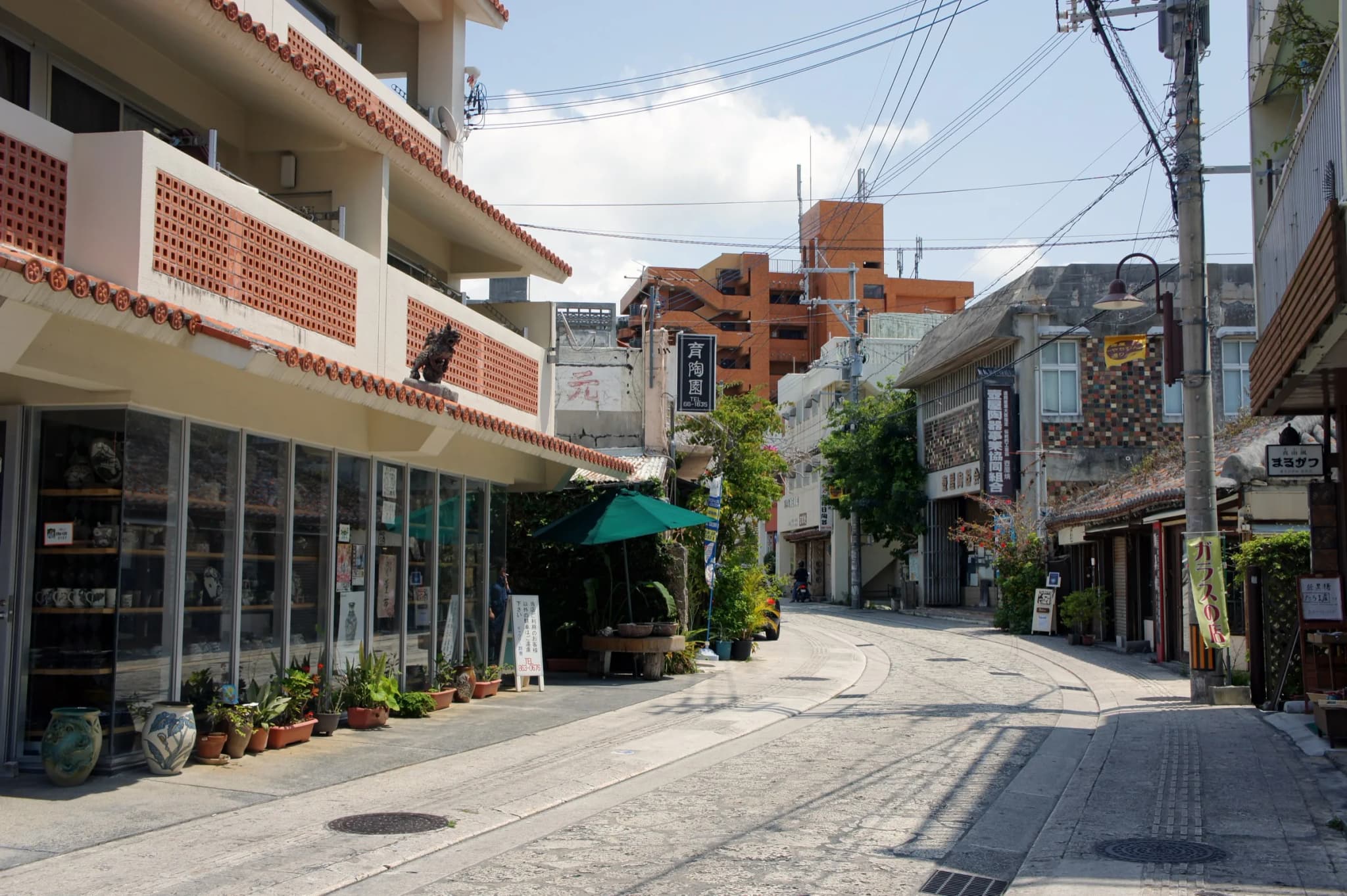
Tsuboya Yachimun Street
Should this item rank higher or lower?
–
**Overview** Start at Makishi Station, then walk into Tsuboya to see how Okinawan pottery fits into everyday objects. A useful visit is to compare a bowl, a cup and a shisa figure across several independent shops before choosing anything. Ask a shop to explain the maker, firing or glaze if you want something beyond a souvenir. You can pair Tsuboya with the market on foot, but allow time for uneven stone surfaces and shops that open later than the station. If a pottery demonstration matters to your itinerary, check the individual workshop instead of assuming there will be one that day. **Key metrics** - Walk from Makishi Station: About 5 min - Walk from Miebashi Station: About 15 min - Walk from Kokusai Street Don Quijote: About 5 min **Pros** - Short rail-to-street transfer. - Pairs naturally with the Makishi market area. - Easy to adjust around shop hours. **Cons** - Some surfaces are uneven. - Independent stores keep their own hours. - Ceramics add weight to bags for the rest of the day. **Best for** Travelers who want a relaxed craft stop and time to compare individual makers. **Things to watch out for** Use a shop or workshop’s own schedule. Ask about protective packing or delivery before buying fragile pieces.
About Tsuboya Yachimun Street
Naha’s historic pottery street, with independent ceramics shops, workshops and cafés.
Also Ranks On
View canonical entity profile (6 lists) →Tsuboya, Naha, Okinawa
Photos (1)
Comments on "Tsuboya Yachimun Street"
Be the first to share your thoughts!
Have a take on this ranking?
Save your rankings and see how you compare. Comments are how the argument actually happens here. Posting one needs a free account — it takes about a minute.
No comments yet.
The first comment sets the terms of the argument.