#6
Ashita no Joe
Should this item rank higher or lower?
–
Pioneered anime's dramatic visual grammar while chronicling slum brawler Joe Yabuki's self-destructive obsession to burn down to pure white ash.
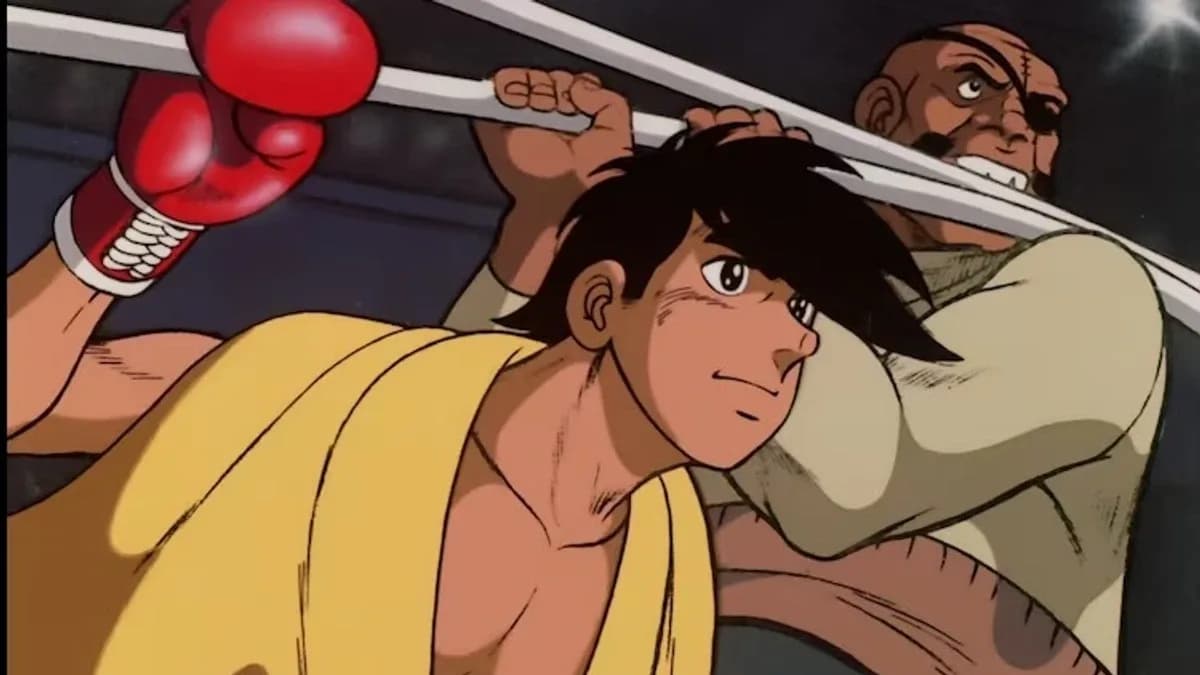
Wandering Tokyo's post-war San'ya slums, defiant orphan Joe Yabuki learns boxing by mail from washed-up trainer Danpei Tange inside juvenile hall, where he meets fated rival Toru Rikiishi. Director Osamu Dezaki forged postcard memories, triple-pans, and sports tragedy's starkest ending.
About Ashita no Joe
Wandering Tokyo's post-war San'ya slums, defiant orphan Joe Yabuki learns boxing by mail from washed-up trainer Danpei Tange inside juvenile hall, where he meets fated rival Toru Rikiishi. Director Osamu Dezaki forged postcard memories, triple-pans, and sports tragedy's starkest ending. Invented Osamu Dezaki's pastel 'Harmony cel' freeze-frames, split screens, and dramatic cross-counter staging imitated for fifty years. Refuses to romanticize boxing's toll, confronting punch-drunk neurological damage, lethal weight cuts, and survivor's trauma head-on. Elevates Ashita no Joe 2 (1980) to timeless cel animation richness during Joe's bouts with Carlos Rivera and Jose Mendoza. Culminates in Joe sitting in his ring corner burned down to 'pure white ash'—the single most referenced final shot in Japanese pop culture.
⛩️ Anime Details
- Studio
- Mushi Production / TMS
- Premiere Year
- 1970
Also Ranks On
View canonical entity profile (1 lists) →Explore all rankings and community verdicts for Ashita no Joe on its canonical entity profile.
Wandering Tokyo's post-war San'ya slums, defiant orphan Joe Yabuki learns boxing by mail from washed-up trainer Danpei Tange inside juvenile hall, where he meets fated rival Toru Rikiishi. Director Osamu Dezaki forged postcard memories, triple-pans, and sports tragedy's starkest ending.
Key Metrics
Studio
Mushi Production / TMS
Release Year
1970
Episodes
126 TV eps (S1: 79, S2: 47)
Director
Osamu Dezaki
Source
Ikki Kajiwara & Tetsuya Chiba manga
Pros and Cons
Pros
- Invented Osamu Dezaki's pastel 'Harmony cel' freeze-frames, split screens, and dramatic cross-counter staging imitated for fifty years
- Refuses to romanticize boxing's toll, confronting punch-drunk neurological damage, lethal weight cuts, and survivor's trauma head-on
- Elevates Ashita no Joe 2 (1980) to timeless cel animation richness during Joe's bouts with Carlos Rivera and Jose Mendoza
- Culminates in Joe sitting in his ring corner burned down to 'pure white ash'—the single most referenced final shot in Japanese pop culture
Cons
- Season 1's 1970 Mushi Production budget relies on limited cel animation and dated audio fidelity
- Episodes 55 through 79 of Season 1 diverge from the manga before Ashita no Joe 2 retells the post-Rikiishi chapters ten years later
- Unflinching 1970s slum violence and juvenile-prison brutality make it a grim, demanding historical watch
Eligibility
- Best for viewers who want the towering dramatic ancestor of all sports anime and Osamu Dezaki's masterclass in Ashita no Joe 2
- Ideal for fans of tragic character studies like Raging Bull where pride and obsession matter more than championship belts
Things to Watch Out For
- Modern viewers should transition from Season 1 Episode 54 directly into Ashita no Joe 2 Episode 1 to avoid anime-original overlap
- Slow 1970s broadcast pacing in early juvenile-detention arcs requires historical patience before Rikiishi's weight-cut tragedy strikes
Photos (1)
Comments on "Ashita no Joe"
Be the first to share your thoughts!
Have a take on this ranking?
Save your rankings and see how you compare. Comments are how the argument actually happens here. Posting one needs a free account — it takes about a minute.
No comments yet.
The first comment sets the terms of the argument.