#9
Cooper
Should this item rank higher or lower?
–
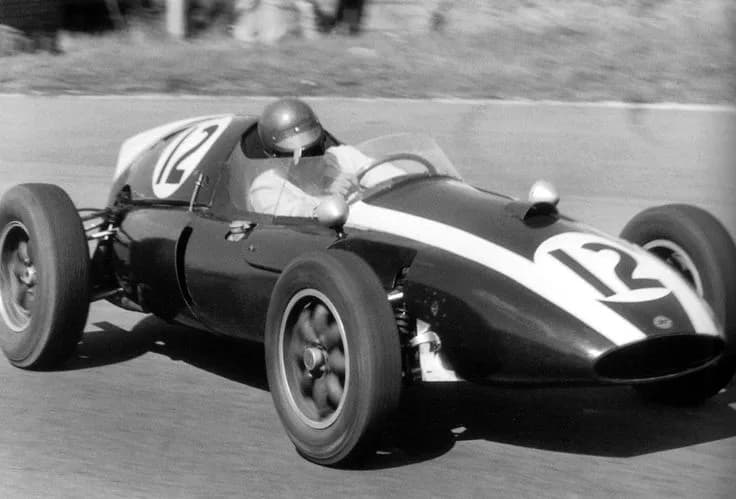
Founded in Surbiton, Surrey in 1947 by Charles and John Cooper, the Cooper Car Company transformed Grand Prix racing by placing the engine behind the driver. After Stirling Moss won the 1958 Argentine Grand Prix in Rob Walker's privateer Cooper T43 and Maurice Trintignant won Monaco, the works team swept F1's next 2 seasons. Powered by Coventry Climax engines, Jack Brabham and Bruce McLaren led Cooper to consecutive Constructors' Championships and Drivers' titles in 1959 and 1960, making Cooper the first constructor to win multiple Constructors' crowns after Vanwall's inaugural 1958 title. Every F1 World Champion since 1958 has driven a rear-mid-engined car. Cooper competed in 129 Grands Prix through 1969, recording 16 wins, 11 poles, and 14 fastest laps. Cooper won back-to-back Constructors' Championships in 1959 and 1960 with 16 Grand Prix wins while pioneering rear-mid-engine cars.
About Cooper
Founded in Surbiton, Surrey in 1947 by Charles and John Cooper, the Cooper Car Company transformed Grand Prix racing by placing the engine behind the driver. After Stirling Moss won the 1958 Argentine Grand Prix in Rob Walker's privateer Cooper T43 and Maurice Trintignant won Monaco, the works team swept F1's next 2 seasons. Powered by Coventry Climax engines, Jack Brabham and Bruce McLaren led Cooper to consecutive Constructors' Championships and Drivers' titles in 1959 and 1960, making Cooper the first constructor to win multiple Constructors' crowns after Vanwall's inaugural 1958 title. Every F1 World Champion since 1958 has driven a rear-mid-engined car. Cooper competed in 129 Grands Prix through 1969, recording 16 wins, 11 poles, and 14 fastest laps.
Also Ranks On
View canonical entity profile (1 lists) →Explore all rankings and community verdicts for Cooper on its canonical entity profile.
Photos (1)
Comments on "Cooper"
Be the first to share your thoughts!
Have a take on this ranking?
Save your rankings and see how you compare. Comments are how the argument actually happens here. Posting one needs a free account — it takes about a minute.
No comments yet.
The first comment sets the terms of the argument.