Thomas Hobbes
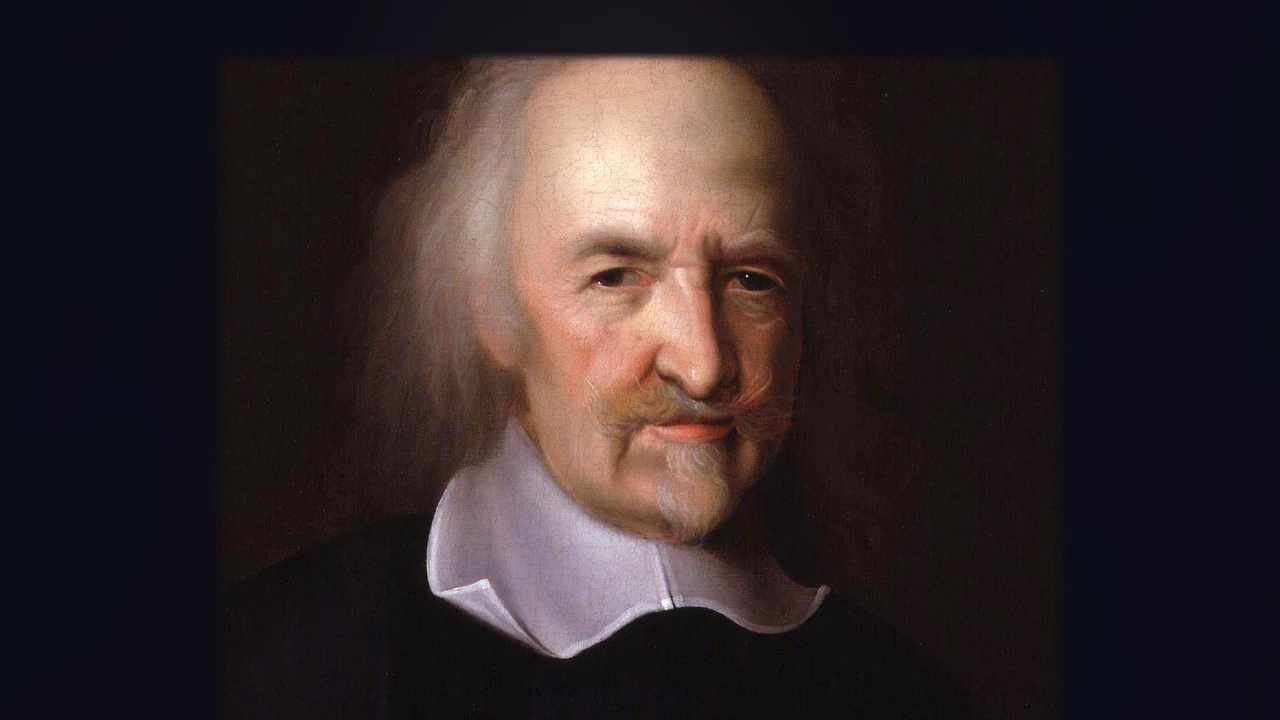
Thomas Hobbes (1588–1679) was a seventeenth-century English philosopher renowned for his social contract political philosophy in Leviathan (1651), as well as his materialism, nominalism, and empiricism He sought to ground political order and civil peace in a mechanistic science of human nature, arguing that individuals authorize an absolute sovereign to escape the anarchy of the state of nature Materialist Empiricism & Nominalism: Hobbes denied Cartesian immaterial minds, holding that all human thought derives from sensory motions and that universals exist solely as common names (nomina) applied to similar individual objects Reasoning as Computation: In De Corpore (1655), Hobbes defined reasoning as computation—specifically the addition and subtraction of names and propositions—an insight later admired by Leibniz and compared to modern computational theories of mind Tripartite System (Elements of Philosophy): Hobbes structured his system across three Latin treatises—De Corpore (1655, physics/logic), De Homine (1658, human nature/optics), and De Cive (1642, politics)—establishing a unified mechanistic hierarchy First British Empiricist: Scholars such as P.H. Nidditch and Paul Russell position Hobbes—rather than John Locke—as the foundational figure of British empiricism, noting David Hume modeled the structure of his Treatise on Hobbes's Elements of Law