North American XB-70 Valkyrie
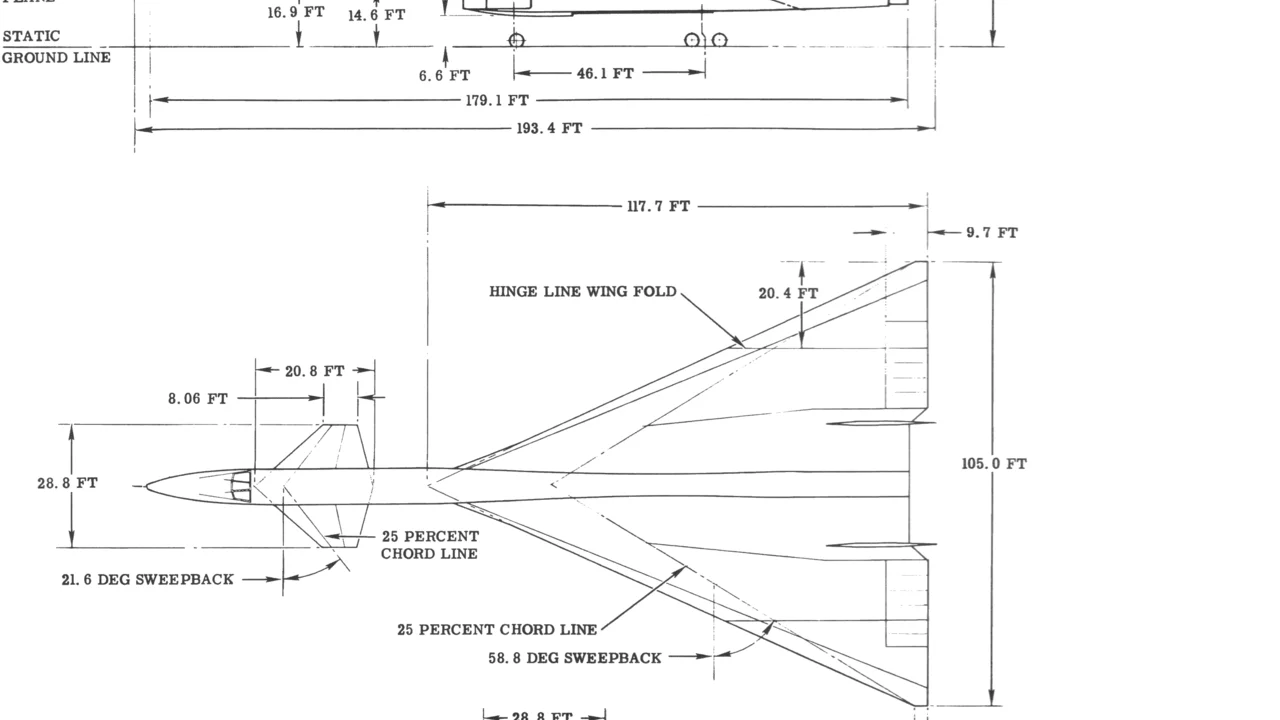
The North American XB-70 Valkyrie was developed in the late 1950s as a high-altitude strategic bomber capable of penetrating Soviet airspace at Mach 3. Powered by 6 General Electric YJ93-GE-3 turbojet engines mounted in an enormous ventral engine bay, the second XB-70 prototype achieved a peak level-flight speed of Mach 3.08 (2,056 mph or 3,309 km/h) at an altitude of 22,250 meters (73,000 feet) on April 12, 1966. The aircraft utilized compression lift, riding its own supersonic shock wave with outer wingtips that folded downward up to 65 degrees at high speeds to improve directional stability and lift-to-drag efficiency. The airframe incorporated stainless steel honeycomb sandwich panels and titanium alloys to withstand sustained skin temperatures exceeding 230 degrees Celsius. However, rapid advances in Soviet high-altitude surface-to-air missiles like the S-75 Dvina and the emergence of intercontinental ballistic missiles rendered high-altitude bombers vulnerable and obsolete. Following the tragic loss of the second prototype in a mid-air collision in June 1966, the sole surviving Valkyrie transitioned to NASA supersonic flight research before retirement to the National Museum o
- Creators Developers:
- North American Aviation
- Core Technology:
- Compression-lift delta wing with downward-folding wingtips and 6 YJ93 turbojets
- Canonical Date:
- First flight September 21, 1964; retired February 1969
Ask or Compare North American XB-70 Valkyrie
Official Stats & Specifications
How high should North American XB-70 Valkyrie rank on Top10Grid?
Cast your vote to weigh in on North American XB-70 Valkyrie.
Be the first to vote on this ranking.