Chiribiquete National Park
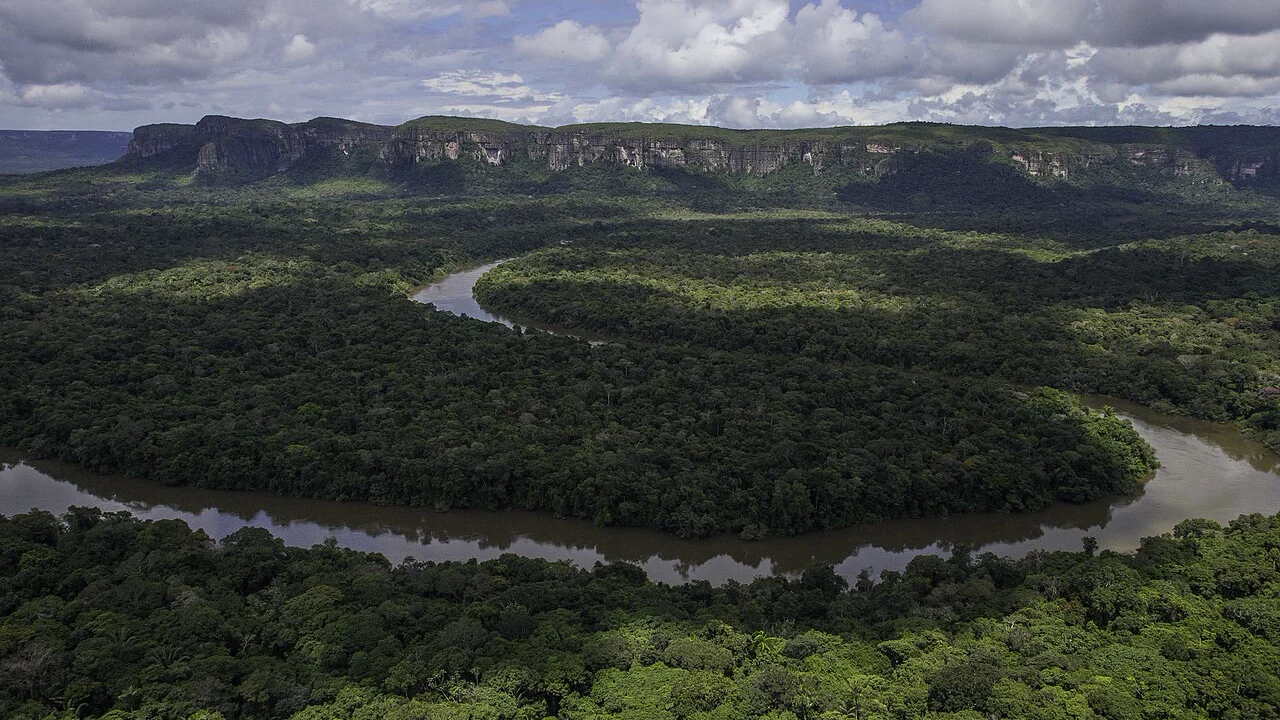
Chiribiquete National Park (Parque Nacional Natural Serranía de Chiribiquete) spans 43,000 square kilometers in the southern Colombian departments of Caquetá and Guaviare, forming the largest tropical rainforest national park on the planet. First established in 1989 and significantly expanded in 2013 and 2018, the park was inscribed as a UNESCO World Heritage site in 2018 for its dual cultural and biological significance. The topography is dominated by towering quartzite tabletop mountains, known as tepuis, which rise precipitously above the dense equatorial canopy of the Amazon basin. On vertical rock faces across the tepuis, researchers have documented over 75,000 rock paintings and petroglyphs created over 20,000 years, depicting hunting scenes, jaguars, and anthropomorphic figures. The park protects exceptional biodiversity at the intersection of the Amazon, Orinoco, Guiana Shield, and Andean biogeographical regions, sheltering jaguars, giant otters, Amazon river dolphins, and numerous endemic plant species. Strict conservation regulations maintain the park as an unvisited wilderness, protecting uncontacted Indigenous communities living in voluntary isolation.
- Founded:
- 1989
- Location:
- Caquetá & Guaviare, Colombia
- Protected Area:
- ~43,000 km²
Official Stats & Benchmarks
- Founded
- 1989
- Location
- Caquetá & Guaviare, Colombia
- Protected Area
- ~43,000 km²
Ask or Compare Chiribiquete National Park
Official Stats & Specifications
How high should Chiribiquete National Park rank on Top10Grid?
Cast your vote to weigh in on Chiribiquete National Park.
Be the first to vote on this ranking.