#4
Rafute
Should this item rank higher or lower?
–
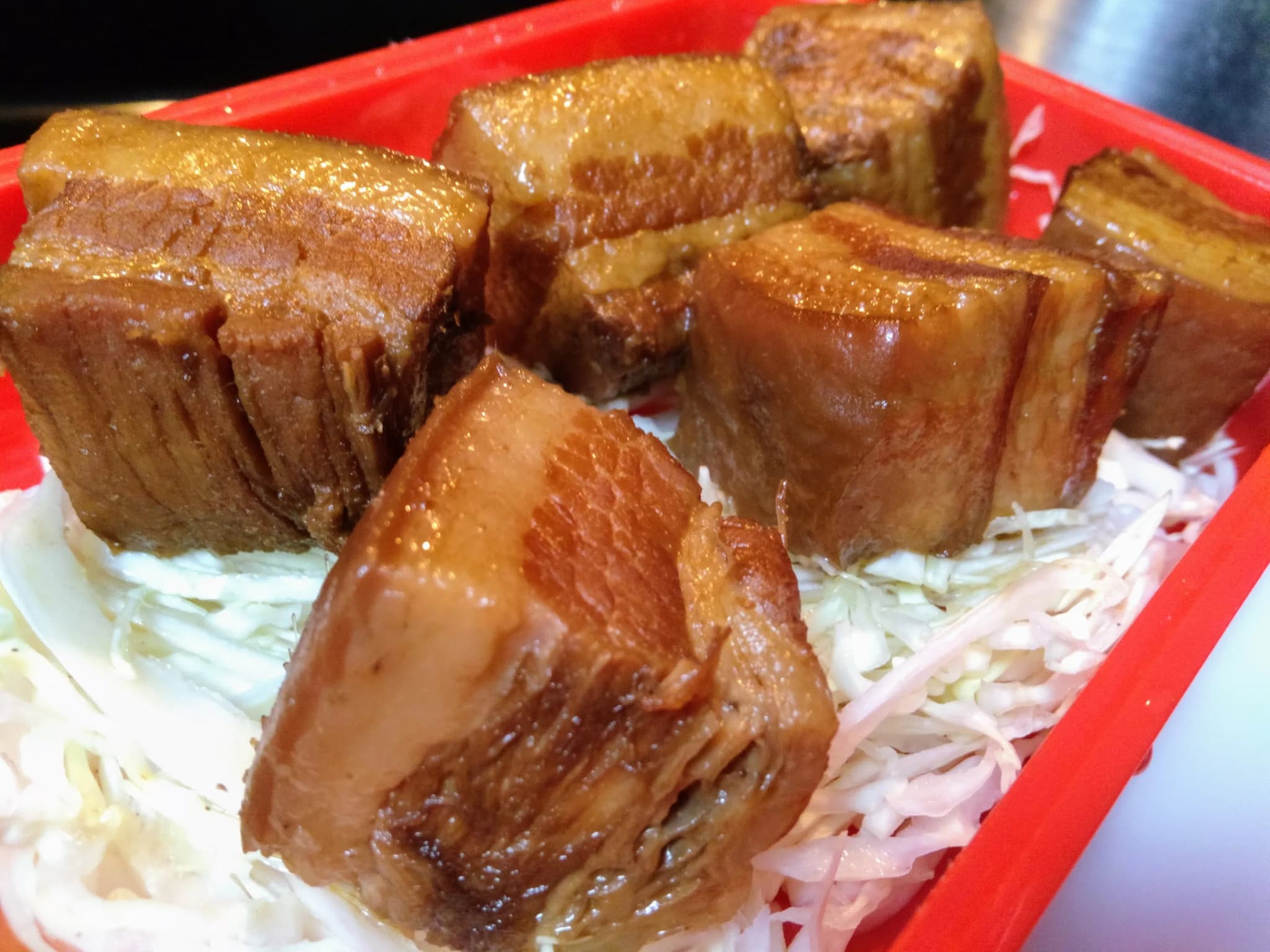
**Overview** The rind should yield as you lift a piece of rafute with chopsticks. MAFF describes simmering skin-on pork with sugar, soy and awamori, with bonito stock in its published reference recipe. The cut’s layers give each bite different textures. It is a good dish to share when you want to compare a sweet, slow-cooked preparation with brighter dishes like goya chanpuru. Look for it as a side or within a set, where rice can take up some of the sauce. **Key metrics** - Awamori, 4-serving recipe: 1 cup - Pork, 4-serving recipe: 700 g - Total time, reference recipe: 6–7 hr **Pros** - Slow cooking brings a different texture from grilled pork. - A small plate gives you a taste without needing a pork-focused meal. - The local spirit is part of the traditional braise. **Cons** - The fatty cut is rich for a full portion. - Awamori is a cooking ingredient. - Bonito stock may appear in the sauce. **Best for** Choose rafute as one plate at a shared Ryukyuan dinner, with a sharper vegetable or seaweed dish alongside it. **Things to watch out for** Ask about the cooking liquid if you avoid alcohol or fish. Preparation varies and the name alone does not establish suitability.
About Rafute
The rind should yield as you lift a piece of rafute with chopsticks. MAFF describes simmering skin-on pork with sugar, soy and awamori, with bonito stock in its published reference recipe. The cut’s layers give each bite different textures. It is a good dish to share when you want to compare a sweet, slow-cooked preparation with brighter dishes like goya chanpuru. Look for it as a side or within a set, where rice can take up some of the sauce.
Also Ranks On
View canonical entity profile (3 lists) →Photos (1)
Comments on "Rafute"
Be the first to share your thoughts!
Have a take on this ranking?
Save your rankings and see how you compare. Comments are how the argument actually happens here. Posting one needs a free account — it takes about a minute.
No comments yet.
The first comment sets the terms of the argument.