#1
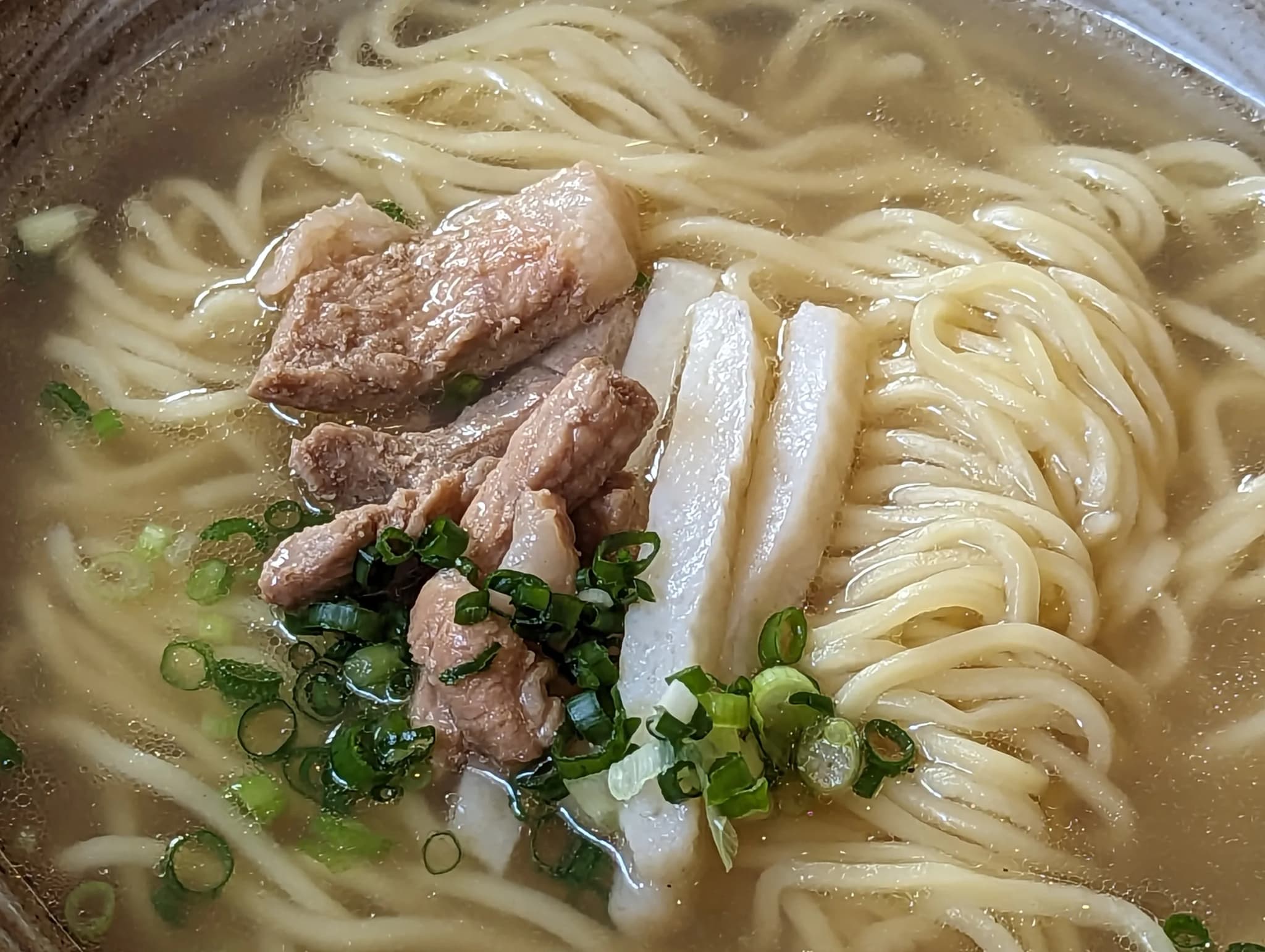
Okinawa Soba
Should this item rank higher or lower?
1
**Overview** Start with a bowl of Okinawa soba and pay attention to the noodles before adding any seasoning. The Ministry of Agriculture, Forestry and Fisheries describes thick wheat noodles served with broth, pork and fish cake. The broth may combine pork and bonito, and the balance differs across kitchens. If the menu offers sōki soba, you can try pork ribs instead of the sliced belly in a standard bowl. Kōrēgūsu, chile steeped in awamori, can go in after you have tasted the broth. **Key metrics** - Soba naming dispute: 1976 - Noodle resting, reference recipe: 2–3 hr - Noodle cut, reference recipe: 2–8 mm **Pros** - The combination of wheat noodles and Okinawan broth makes a clear first reference point. - Pork belly and rib versions let you choose the cut. - Specialist shops make the dish easy to identify on a menu. **Cons** - A second bowl can repeat much of the first one’s flavor profile. - Wheat is central to the noodles. - The broth may include both pork and fish. **Best for** Order it as the first lunch of an Okinawa trip, especially if you want a meal you can compare across several towns. **Things to watch out for** Check the broth if you avoid animal ingredients. Kōrēgūsu contains awamori, so taste or skip it according to preference.
About Okinawa Soba
Start with a bowl of Okinawa soba and pay attention to the noodles before adding any seasoning. The Ministry of Agriculture, Forestry and Fisheries describes thick wheat noodles served with broth, pork and fish cake. The broth may combine pork and bonito, and the balance differs across kitchens. If the menu offers sōki soba, you can try pork ribs instead of the sliced belly in a standard bowl. Kōrēgūsu, chile steeped in awamori, can go in after you have tasted the broth.
Also Ranks On
View canonical entity profile (3 lists) →Photos (1)
Comments on "Okinawa Soba"
Be the first to share your thoughts!
Have a take on this ranking?
Save your rankings and see how you compare. Comments are how the argument actually happens here. Posting one needs a free account — it takes about a minute.
No comments yet.
The first comment sets the terms of the argument.