Photos (1)
Should this item rank higher or lower?
**Resumen** El taco rice básico lleva carne sazonada, lechuga, tomate y queso sobre arroz blanco. El municipio de Kin atribuye su creación a Matsuzō Gibo, de Parlor Senri, en 1984. Su idea era ofrecer una comida económica y abundante. Hoy lo sirven cafeterías y restaurantes de carne, con variantes como el omutaco, que añade huevo. Para el primer pedido, la combinación de queso y verduras permite apreciar el contraste entre la carne caliente y las guarniciones frescas y crujientes. Así tendrás una referencia antes de probar otras versiones. **Datos clave** - Primer servicio en Parlor Senri: 1984 - Cierre de Parlor Senri: 2015 - Precio indicado por Jack’s: ¥600 **Ventajas** - En un plato tienes arroz, carne y verduras. - Su origen en Okinawa está documentado. - Puedes comparar la versión clásica y la que lleva huevo. **Desventajas** - En algunas cartas, el queso y las verduras se cobran aparte. - El tamaño de las raciones varía. - El picante depende del local. **Ideal para** Almuerzo rápido en Kin o con viajeros que ya disfrutan de los sabores de los tacos. **Ten en cuenta** Revisa la guarnición: en algunas cartas, taco rice y taco rice con queso y verduras son pedidos distintos.
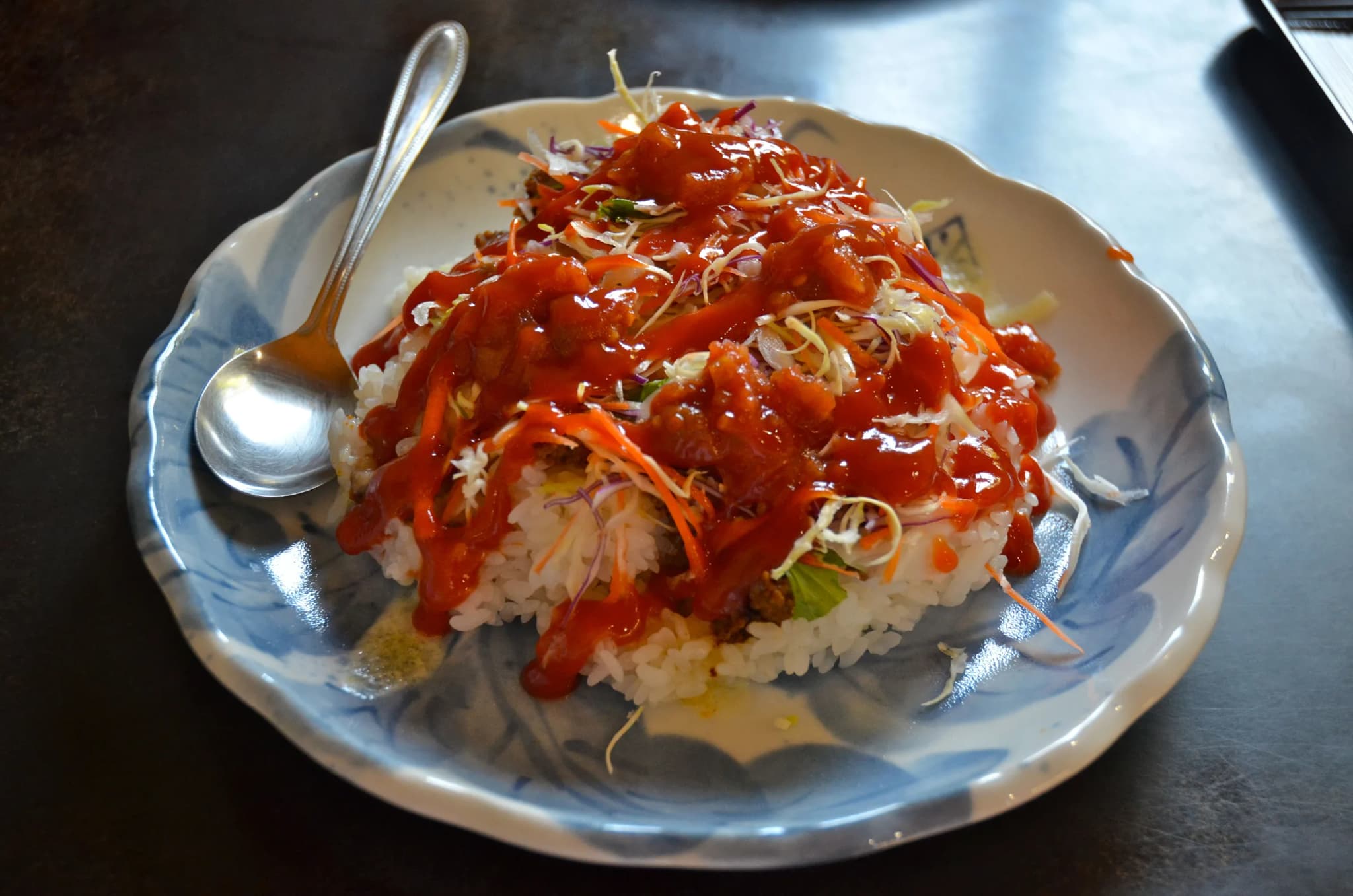
At its simplest, taco rice puts seasoned meat, lettuce, tomato and cheese over white rice. The town of Kin credits Matsuzō Gibo of Parlor Senri with creating the dish in 1984 to give customers an affordable, filling meal. Today the same format is served by cafés and steak houses, with versions such as omutaco, which adds egg. For a first order, the cheese-and-vegetable combination gives you the contrast between warm seasoned meat and cool, crisp toppings.
Comments on "Taco Rice"
Be the first to share your thoughts!
Have a take on this ranking?
Save your rankings and see how you compare. Comments are how the argument actually happens here. Posting one needs a free account — it takes about a minute.
No comments yet.
The first comment sets the terms of the argument.